Velocity
The Woman in Cabin 10Velocity is the travel magazine employing Laura Blacklock for nearly ten years and sending her to cover the Aurora’s maiden voyage. It functions first as a coveted professional gateway: the assignment offers Laura a chance to escape routine production work, impress influential figures, and compete for Rowan’s maternity cover. By the end of the voyage, however, the magazine has become the measure against which Laura reassesses her ambitions. She realizes that advancement within its luxury-travel world is not the same as the investigative writing she now wants to pursue.
Organization and Editorial World
Velocity is a travel publication whose work includes the polished presentation of luxury destinations and the cultivation of commercial relationships. Laura describes her normal duties as cutting and pasting press releases and finding images for articles sent back from luxury locations by her boss, Rowan. This background places her low in the magazine’s hierarchy: she has substantial experience, but her routine is closer to editorial support than to the glamorous reporting associated with senior writers.
The magazine’s interests are closely tied to the luxury-travel industry. Its assignment on the Aurora is not simply a neutral piece of travel reporting. Jenn explains that the main objective is a favorable article about the vessel because Rowan hopes to bring its owners on board as advertisers. Profiles of notable guests would be useful as well, but the commercial purpose remains central. Velocity therefore depends upon access to the wealthy people and businesses it covers, creating a tension between journalism as investigation and journalism as publicity.
Laura’s Assignment and Professional Stakes
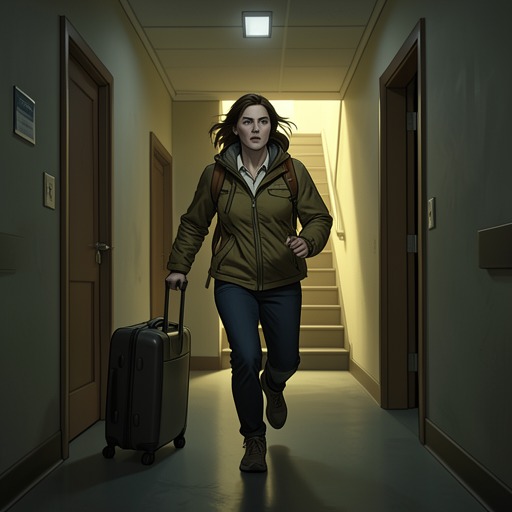
Laura learns that she has forgotten to contact Velocity only after the burglary at her flat, when an email asks whether she is planning to show up that day. She buys a cheap pay-as-you-go phone and calls Jenn from a café, presenting the break-in as more comic than frightening. Despite the burglary, her exhaustion, and the vivid flashbacks that interrupt ordinary tasks, she refuses the suggestion that someone else should cover the northern-lights assignment.
The opportunity matters because it has fallen to her unexpectedly. Rowan was originally meant to go on the cruise, but pregnancy-related hyperemesis prevented her from traveling. Laura interprets Rowan’s decision to send her instead of a more senior colleague as a vote of confidence and a test of whether she can cover Rowan’s maternity leave. The cruise leaves on Sunday, only two days after Laura’s call, making her decision to continue both immediate and consequential.
Laura sees the assignment as a possible escape from ten years of “boring cut-and-paste journalism.” The Aurora’s owner, Richard Bullmer, is presented as a major commercial figure, and Laura calculates that even a small share of his advertising budget could keep Velocity afloat for months. The passenger list may also include prominent travel and photography figures whose bylines could benefit the magazine. Her ambition is not merely to produce a good article: she wants Richard’s contact details and the confidence that he will answer when she calls, because that access could help her secure the promotion she has been promised for years.
The Magazine’s Commercial Logic Under Pressure
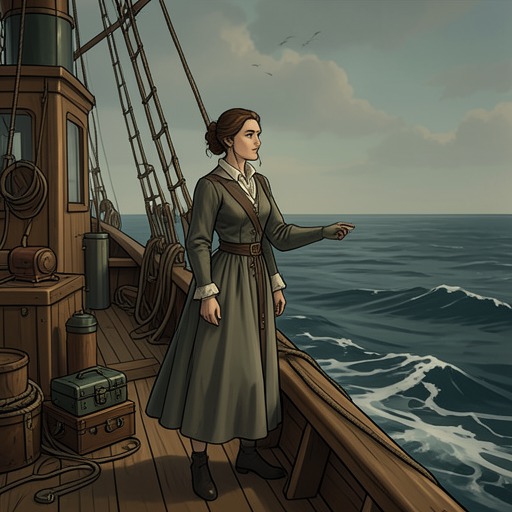
The assignment’s intended tone is promotional, but Laura’s experience on the Aurora turns the publicity trip into an investigation. When she reports that a woman may have been thrown overboard, the ship’s security response treats the absence of proof as a reason not to alarm the passengers. Laura understands the institutional pressure behind that response: the vessel is on its maiden voyage, crowded with journalists, photographers, and influential guests, and a death could produce headlines capable of sinking the enterprise before it has properly launched.
The danger extends beyond Richard Bullmer and the ship’s reputation. If the Aurora fails, everyone from the captain to the cleaner could lose their jobs. This atmosphere makes the magazine’s promotional mission part of a larger network of commercial interests. A serious investigation could threaten the vessel, its owner, its investors, the invited media, and the livelihoods attached to the cruise. The result is a structure in which the demand for a favorable story is not expressed only as a direct order; it is embedded in the economic circumstances surrounding access, advertising, employment, and reputation.
The canceled presentation on the northern lights reinforces this conflict. Richard was meant to give the talk, accompanied by Cole Lederer’s photographs, but Richard is called away to an emergency and Cole hurts his hand. The event is postponed until after the passengers return from Trondheim. The disruption leaves the promotional program suspended while Laura’s account of a possible death becomes the more urgent story, even though it is precisely the kind of story the cruise’s publicity machinery cannot comfortably accommodate.
Laura’s Transformation as a Writer
Before boarding the Aurora, Laura believes she must prove that she can network, schmooze, and place Velocity’s name among high-flying guests. She imagines the assignment as a route toward Rowan’s position and treats withdrawal as a loss she cannot afford. On board, the contrast between that career goal and the danger around her becomes increasingly stark. She is expected to participate in luxury hospitality while suspecting that someone has disappeared and that the organization around her may be suppressing the truth.
Laura’s decision to investigate is framed through her memory of the journalist she once intended to become. While making herself up for dinner, she applies mascara borrowed from Chloe Jenssen as though putting on protective war paint, but the professional mask does not erase the conflict. She remembers beginning university with dreams of investigative reporting and of changing the world, then moving into travel writing to pay the bills and gradually enjoying its privileges. She does not reject the work as fraudulent; she recognizes that she has done her best within the job she found. What becomes intolerable is the idea that comfort and advancement might require her to ignore the story directly before her.
The threat telling her to stop investigating intensifies this choice. Rather than retreat to her cabin, Laura asks Karla whether there is anything the crew member has been unable to say in front of Camilla Lidman, promises to protect an anonymous source, and identifies herself as a journalist. She then writes “NO” in the steam on the mirror after remembering the warning to stop digging. Velocity’s professional identity, initially associated with press packs and favorable coverage, is thus reclaimed by Laura as a reason to pursue evidence and protect sources.
Reassessment and Ending
Laura’s ordeal eventually changes her understanding of what the magazine’s promised promotion represents. When she speaks with Judah Lewis after returning, she explains that she spent almost ten years at Velocity while other people, including Ben Howard, took risks and moved toward larger opportunities. She had felt indebted to the magazine for standing by her during difficult periods, but she now sees that Rowan’s maternity leave will end and that the promotion cannot provide the future she had imagined.
Her rejection is also ethical and aesthetic. Laura does not want a life modeled on Tina West and Alexander Belhomme, moving from country to country while seeing only five-star hotels and Michelin restaurants. She has come to distrust a system in which senior travel writers report the stories Richard Bullmer wants them to tell. The issue is not that luxury travel writing is inherently shameful; Laura admits that she enjoyed the perks. The decisive change is that she no longer wants those pleasures to determine what she writes or what truths remain unreported.
Velocity therefore remains important even as Laura moves away from its career ladder. The magazine gave her the assignment that placed her in danger, but it also supplied the professional identity through which she resisted silence. By the ending, she believes she can freelance from anywhere and imagines writing a book about her experience aboard the ship, provisionally calling it My Floating Prison: True-Life Hell on the Seven Seas. Her relationship with Velocity changes from dependence and gratitude to critical distance: the organization is no longer the destination of her ambition, but the institutional world from which a more independent form of writing can begin.